

Travelling to Italy is fun, but living there is even better! If you have planned to move to Italy from Sweden, here is some advice for you.
Before you leave, you need to plan for your future in the country. It doesn’t matter which Italian city you’ve decided to move to, whether it’s in the north or the south, you need to be aware of the processes required to settle in your new country.
In this article, we covers how to settle in Italy, why you should move there, administrative steps (eg residence permit), how to learn Italian and how much it will cost. Once you’ve read all our articles on it, you’ll be all set. Let’s go!
🇮🇹 Facts about Italy
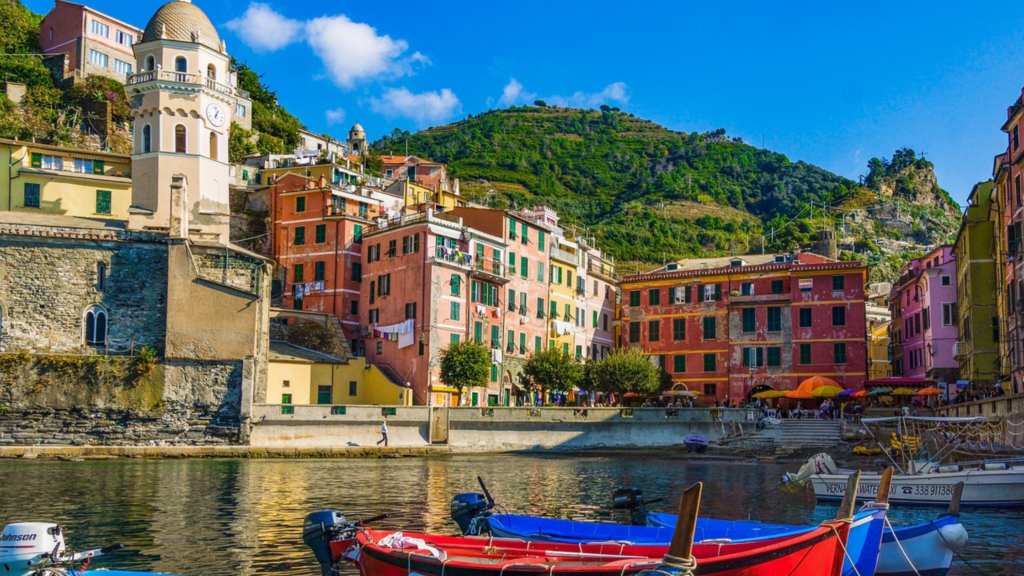
For those of you unfamiliar with Italy, the country often referred to as the ‘boot of Europe’ – due to its geographic shape factor – is nestled on the northern Mediterranean coast between Spain and the Balkan Peninsula. With one of the continent’s oldest pasts, Italy is home to some of the most celebrated works of art, architecture and sceneries. Today, Italy is best known for its wonderful food, its idyllic little mountain villages, coastal communities and stunning beaches. In winter, tourists visit their ski systems in the north and in summer they queue for gelato, pizza and pasta along the restaurant-lined parades and small streets of the southern coasts.
Can you move to Italy as a Swede?
Italy, just like Sweden, is a member of the European Union and as a Swedish citizen (and also an EU citizen) you can move to the country without any problems. Initially you can stay for three months without the requirement of other papers, but after this the Italian state requires you to register as a resident.
- Register as a resident of Italy:
To do this, you must visit a local population registration office and fill in your details to register there. You can look for work or start an education as usual, during your first three months and if you haven’t managed to get either when you register, you instead need to show that you have enough money to support yourself. - Get your Italian Codice Fiscale:
When you are registered in the civil registration register, it is time to get hold of your Codice Fiscal – your Italian tax number. This number can also be seen as your Italian social security number and is used in all official situations, such as when paying taxes, signing contracts, etc. To apply for your Codice Fiscal, visit the nearest tax office (Agenzia delle Entrate) – together with your passport – and then fill in your application. At the visit you will be given your Italian tax number and then have to wait for the official ID card to be sent home in the post. - Deregister in Sweden:
As soon as you register as a resident in Italy, the Swedish Tax Agency also wants you to notify them of your move from Sweden. The easiest way to do this is to visit the Tax Agency’s website and fill in form SKV 7665.
Get your finances in order – get a local bank account
Once you’ve registered as a resident of Italy, the next step on the list is to get an Italian bank account.
Because of course it is fine to continue using your Swedish account and in the event that you will not be working – or studying with Swedish study funds – it may even be an advantage to do so.
Otherwise, however, you will need an Italian bank account. When you start working, your employer wants to be able to deposit money as a local transaction and not have to deal with international transfers, which also cost you a lot of money unnecessarily, and when you have to spend your salary, you of course want to avoid the same problem and situation.
As a registered resident with your Codice Fiscale, you can apply for a regular bank account or a joint one, with the bank you prefer.
To open a bank account, visit the nearest office with your passport, Codice Fiscale and an invoice, letter or other document that proves your residence status at your address.
EXTRA TIP: you can also open a bank account in Italy as NON-RESIDENT; surely things will get complicated but Italian law still allows the opening of a current account. Here are the key points to consider:
✅ you can open a non-resident bank account if: you don’t have the tax residence in Italy, you’ve not been registered in the resident register for 183 days, you hadn’t your domicile in Italy for 6 months or simply you have not had your habitual residence there for more than half a year.
✅ A bank account for non-residents is similar to a regular account but may have higher costs. Not all banks offer this service, and some employees may not be aware of it, so it’s advisable to inquire beforehand.
❌ Many banks may decline to open a bank account without the residenza. However, this notion is incorrect as the law affirms your right to open a bank account.
🏦 Some banks, like Intesa San Paolo, allow non-residents to open accounts. Other banks known to provide this service are UniCredit and Fineco.
❌ If some branches of these banks told you that it is not possible without residency, just go to another branch
In the case of real estate sales, there is also an alternative:
The buyer can sign a trust mandate to the chosen notary with which he instructs the officer himself to receive the necessary sums that will be depositated in a dedicated bank account by the notary (L. 147/13 art. 1 c. 63-67). The notary will be authorized to use the same sums to issue bank transfers in favor of the sellers of the property.
How to choose a bank in Italy
Choosing a bank in Italy should be done in a similar way as in Sweden – with a few exceptions. At home in the mother country, we are all used to being able to pay by card everywhere and even if it is starting to catch up in places like Italy – many payments are still made in cash.
Therefore, be sure to check the bank’s conditions for cash withdrawals and if, for example, they charge fees when you use other Italian banks’ machines. If you need to send money between your Swedish account and your Italian one, it is also worth reviewing fees for international transactions, payments and currency exchanges.

Find somewhere to live in Italy – where is the best place to live in Italy?
It is generally cheaper to live in Italy than at home in Sweden, but despite this, of course, prices vary depending on where you choose to settle. Just like at home in Sweden, it is of course more expensive to live in the cities and if you settle in Rome, Milan or Napoli, you can also count on higher rent (but hopefully also a higher salary).
The easiest way to find accommodation is via the internet and then through sites such as Immobiliare.it, where homes for the whole country are advertised and sold or rented out.
The climate and the countryside
Thanks to the Mediterranean Sea and the Adriatic Sea, the Italian peninsula has a pleasant climate where you can enjoy the sun without getting too burnt. There are almost 250 fine sandy beaches in Italy!
This is an excellent reason to discover nature from the Gulf of Naples to the Cinque Terre. A quick boat ride can take you to Palermo in Sicily or to the famous Mount Etna. Finally, there are also the great Italian lakes such as Lake Iseo and Lake Garda.
How much does it cost to live in Italy?
The cost of accommodation is one of the most important things to consider before going to Italy. Of course, the price is not the same in all cities, nor are prices the same in the city centers of Rome, Bologna and Naples as they are in the surrounding suburbs. The rent can vary from 700 euros in Modena to 1,400 euros in Florence, for example. You have to adapt according to your budget.
You also have to count on brokerage fees (about 10% of the annual rent) or maybe even a deposit of two or three months’ rent (depending on the landlord). It can be a lot of money when you first arrive.
If you can afford to live in Sweden, you won’t have any problems in Italy. On average, the cost of living in Italy for 2024 is 2% lower than in Sweden. In general, everything is a little cheaper in Italy, especially food and eating out. You get a lot more for your money in Italy. In some cases, however, transport may cost a little more depending on where you are and where you are going.
Learn Italian to move to Italy
If you’re going to Italy on vacation, you probably don’t need to be fluent in Italian. But if you want to live permanently in the country, you should probably learn the language. Considering that Italian comes from the Latin language and Swedish from the North Germanic, Italian should therefore be a little more difficult to learn than languages that are closer to our own.
You will need to learn a few greetings before you move to Italy. If you don’t know a single Italian word, you will have a hard time, especially when it comes to finding housing or work! If you’re planning to spend some time in Italy, you’ve probably thought about learning to speak Italian fluently. It is definitely the best way to make the most of your time there, although the Italians have a good level of English.
By living in the country and taking lessons, you will be able to become very good at the language. This will open doors when it comes to finding work or a career in Italy. Since most employers want proof of your language level, passing Italian exams is quite important.

Move to Italy with children
If you and your family are moving down to the Mediterranean coast and the little (or big) childrens are coming along, you also need to review their needs – usually school and/or kindergarten.
For the smaller children, nido and asilo apply – daycare and preschool for children between 3 months and 6 years.
Nido applies for the first three years and then it’s Scuola Materna until Scuola Elementare starts at the age of six. None of the options are requirements for the children to continue in school, and if you choose to put your children in nido or asilo, you will be charged based on location and family situation.
For the older children, it is schooling from the age of six and with this also compulsory schooling until the day they turn 16. Schooling is either public or private, both of which are controlled by the state. The public schools come with relatively low costs that are based on the individual family situation. Private schools are run by private organizations, such as churches and religious organizations and at a higher cost – but with greater influence over the actual curriculum.
This is how you get healthcare in Italy
When you first arrive in Italy, you must have your European Health Insurance Card with you. With this you get access to the public healthcare system under the same conditions as the Italian population and otherwise you have to cover any healthcare costs yourself. If you have registered as a resident in Italy, you will then have the same access to the healthcare system after the coverage from your European healthcare insurance card has expired.
There is also private healthcare available and for those who can afford it, Italy’s is also one of the best in the world. Through this you get access to the very best doctors, specialists and clinics and can often get help faster than via the public system which – just like the Swedish one – suffers from long queues and waiting times.
The public Italian healthcare system (Servizio Sanitario Nazionale – SSN) is – just like in Sweden – socialized, but also managed at a regional level.This means that the quality of care varies depending on where in the country you are and, as a rule, it is said that the healthcare is better at hospitals in the northern parts than it is at those in the south.
Bring your pet to Italy
Should you bring your pet to Italy, there are usually no problems. However, it is first required that they are vaccinated and chipped (ISO Standard 11784 or Annex A to ISO standard 11785) to be allowed into the country. All pets must be vaccinated for rabies at least 21 days before entering the country and at the latest 3 years before.
In addition to this, the animals also need to have their papers in order, and by this we mainly mean certificates from the veterinarian that prove the vaccinations the animal must have received.
Find friends in Italy
Last but not least, we then come to the point regarding friends. Because if you don’t have the world’s mega-tour and all your friends back home from Sweden also decide to move down to Italy at the same time – then you will have to get new ones.
The easiest way to do this is to get involved in various expat groups and start entering your new social life with people who speak the same language as you. You usually find these groups on social networks like Facebook but also through services like Meetup, which regularly organize meetings together with local people and expats.
Checklist before moving to Italy
Okay! We’ve finished with our guide on how to move to Italy and before we close the book for this time we will take and summarize what we have gone through a little quickly so you remember all the important points:
- It’s important to register as a resident if you stay for more than three months and with this also obtain your Codice Fiscale.
- Deregister with the Swedish Tax Agency.
- Get a local bank account
- Italian is not a requirement to live or work – but it makes it easier.
- It is cheaper to live outside the big cities than in them – but also with fewer job opportunities.
- If you want to bring the children, there are plenty of options for school and childcare.
- Healthcare is largely free
- If you are going to bring your pets, make sure to arrange paperwork and vaccinations before your departure date