
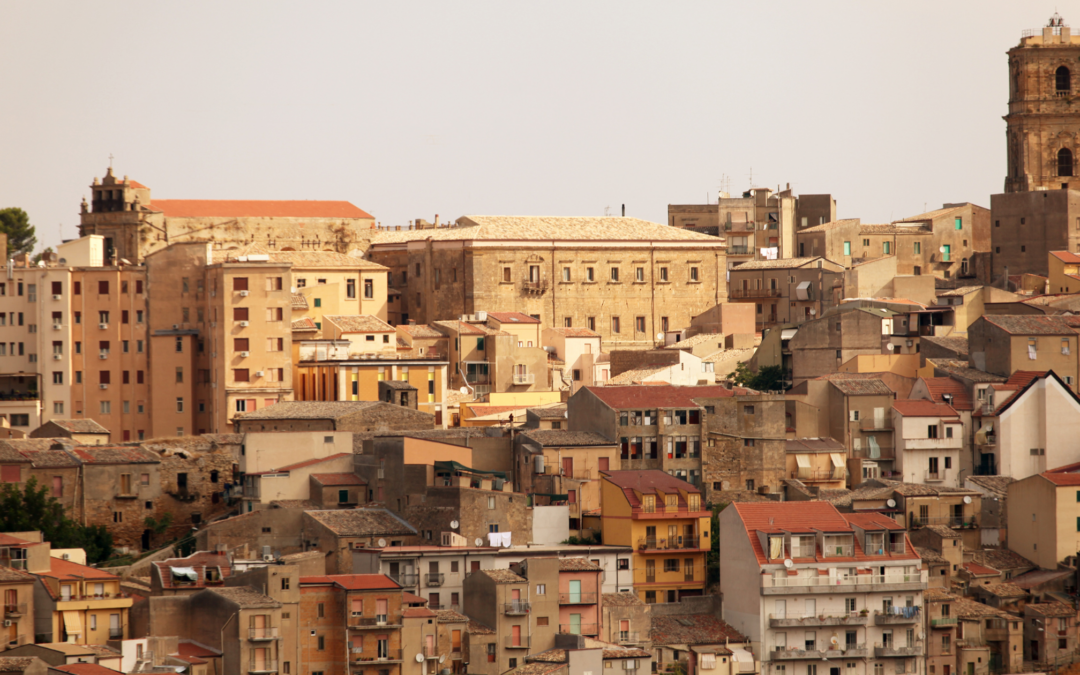
Is it really possible to buy a house in italy with just 1 euro? You have surely already heard about it and even if it’s too good to be true it’s exactly so; in some small italian town you can really buy a property with just 1 € but there are more than a but. Let’s delve together into how this project works, the pros and cons of buying a 1€ house in Italy.
The 1€ House Project
One of the most popular initiatives to tackle the abandonment of small towns and revive the local economy is known as “Houses for 1 Euro”. It involves the sale of abandoned houses, in poor condition and in need of renovation, for just 1 euro.
These are apartments and villas of private citizens from North to South destined for abandonment or demolition, which in this way can be renovated. These properties are mainly located in the central and southern area of Italy but every now and then there is also some opportunity in northern Italy.
Buying houses for just 1 euro is possible thanks to the public procedures promoted by various municipalities and there are some specific requirements to fulfill, which vary depending on the Municipality’s announcement. Some of these, however, are fixed:
- the renovation and revaluation of the property must take place within 365 days of purchase
- the notary fees for registration, transfers and land registry of the property are borne by the buyer;
- the works will have to start two months after the green light for the permits is obtained;
- sign a guarantee policy of 5.000,00 € lasting 3 years to guarantee the purchase for the Municipality.
Both private Italian, EU and non-EU citizens as well as individual businesses, agencies or companies whose corporate purpose is the management of properties for tourism and hospitality use can participate in the tenders. However, companies must be registered with the C.C.I.A.A. – Chamber of Commerce, Industry, Crafts and Agriculture and be in compliance with the current provisions regarding welfare and social security contributions such as INPS and INAIL.
Buying a 1 € House as a foreigner
It is true that foreigners, including citizens not resident in Italy and non-EU citizens, may have the right and possibility to take advantage of the 1 euro Homes bonus. However, it is important to underline that it is necessary to establish an agreement between the Italian government and the government of the potential buyer’s country of origin (principio di reciprocità). This agreement is fundamental to regulate the methods of participation and the specific conditions for interested foreigners.
A key element to benefit this opportunity is to have the Italian tax code and the necessary documentation. The tax code allows the payment of taxes and serves as an identification tool in relations with public bodies and administration.
This initiative can represent an interesting opportunity for foreign citizens who love Italy and wish to purchase a house in the Bel Paese without necessarily having to invest a large sum. However, it is important to be aware of the specific requirements, procedures and any restrictions that may vary depending on the country of origin and the agreement made between the governments involved.
How the sale takes place
Each Municipality defines the methods of purchasing the 1€ houses and makes them known through a specific tender. In general, it is the municipal administration itself that promotes the project and acts as guarantor of the sale.
Anyone who buys a house for 1 euro is required to present a complete renovation and revaluation project for the property, including the expected timescales for the works. Furthermore, the buyer is responsible for paying all expenses related to the purchase, such as notary, transfer and registration fees.
To guarantee the execution of the renovation works, the buyer must also take out a suretyship policy of a variable amount. This policy acts as a guarantee for the municipal administration and expires upon completion of the works, demonstrating that the property has been adequately renovated.
It is important to take into account that specific details and conditions may vary from municipality to municipality. It is essential to carefully read the sales notice and understand all the provisions and obligations before proceeding with the purchase of a house for 1 euro.
PROS
The 1 Euro Houses initiative allows potential buyers to purchase homes at the symbolic price of one euro, with the main aim of saving abandoned or degraded properties in some Italian villages that are suffering constant depopulation. There are numerous advantages that can be gained by joining the initiative. The main ones are:
- Sustaining reduced expenses: Those who join the 1 Euro Homes initiative are lucky enough to become owners of the property by paying only a symbolic sum of one euro. Consequently, although the sum to be paid is not limited to one euro, the buyer gets a great deal by taking advantage of the 1 euro homes initiative and the benefits made available, also investing a few thousand euros for a house that will subsequently have a much higher value than what was spent.
- The repopulation of small towns: Many villages in Italy are becoming depopulated due to their distance from the big cities, the 1 Euro Houses project was born with the aim of repopulating these villages. The intent of the initiative clearly emerges from the obligation to renovate the house within a certain period of time. Furthermore, priority is given to those who intend to establish residency.
- The possibility for young people to be able to go and live on their own: In Italy, there are many young people who feel the need to go and live on their own, but unfortunately many of them do not have the economic independence necessary to be able to do so, due to the rather high prices of properties, especially if they have a garden or a parking space. Buying a house for 1 euro could be an excellent investment opportunity and a valid solution for all those who want to leave their parents’ house soon and be more independent. Furthermore, in small villages the cost of living is lower than in large metropolitan cities and the comfortable and quiet environment will certainly provide moments of peace after a chaotic day.
CONS
The “1 Euro Houses” project involves the sale of a property by the Municipality at the symbolic price of one euro. However, it is important to understand that buyers need to be aware of the additional costs associated with purchasing and renovating the property. Those buyers have specific obligations, with the most relevant concerning the renovation of the home. It is essential to respect the deadlines established for the renovation and revaluation of the property, usually within one year of purchase. Furthermore, it is common for renovation work to begin within two months of obtaining permits.
It is important to note that specific requirements may vary from municipality to municipality. Some municipalities may request the start of works within an even shorter timeframe. The main objective of this condition is to recover homes that risk becoming abandoned and without economic value, making them difficult to put back on the market.
The renovation of houses for 1 euro not only aims to improve the conditions of the homes, but also to enhance and revitalize the villages involved in the project. Meeting the deadlines for the renovation is essential to ensure that the homes are transformed into quality residences and that the project is successful in its goal of breathing new life into these communities.
In addition to the renovation costs, the buyer is also responsible for notary fees, transfers and land registration. These costs concern the registration of the change of ownership, the administrative changes relating to the property and its land registry registration. It is important to carefully evaluate all these additional costs and consider the budget needed for the purchase, renovation and administrative costs related to the property, in order to make an informed decision.
Furthermore, the houses sold through the “1 Euro Houses” project are generally located in small, isolated villages that face the problem of depopulation. These villages are often located in rural or remote areas, where the population has declined over time due to migration to large cities. When you buy a house in this way, therefore, you must take into account that it will always be isolated.
How much does a 1 € house really cost?
I’ll start by telling you that 1 euro for the purchase of a house is absolutely approximate: all things considered, you will have to shell out much more. First of all it must be said that the Municipality only acts as an intermediary between supply and demand and that whoever buys the house undertakes to renovate it within a certain period of time, usually from one to three years. In addition to the renovation costs, it is necessary to consider the expenses related to the regular transfer of ownership of the property, all of which are borne by the buyer. I’m talking about notary, tax, transfer costs, even late succession and any building amnesties. The seller must then be reimbursed for the expenses incurred during the period in which the property was made available to the municipality, which means that local and state taxes and duties must be reimbursed. Finally, a surety policy will be needed to guarantee the purchase of the property, usually for 5.000,00 euros. For these expenses alone you need to take into account no less than 20.000,00 € (renovation not included).
The assignment of the house normally takes place on the basis of the chronological order of receipt of the expression of interest, but if other requests arrive within the following 30 days, a ranking is created. The priority criteria are always well specified in the tender, including the use of local workers. In the event of an equivalent score, a draw will take place. Having said this, it is worth remembering that 1 euro is a symbolic figure in every sense because then adding all the other costs, renovation included, we could even reach 200.000,00 €. As in the ‘particular’ case of a couple of American lawyers in Sambuca di Sicilia.
In conclusion: buying houses for 1 euro is not always convenient; it is necessary to evaluate on a case-by-case basis whether one has the economic availability and will to invest in a property to be redeveloped in a particular historical and landscape context. Otherwise, it may be more convenient to choose a different solution.